Suyool Youth

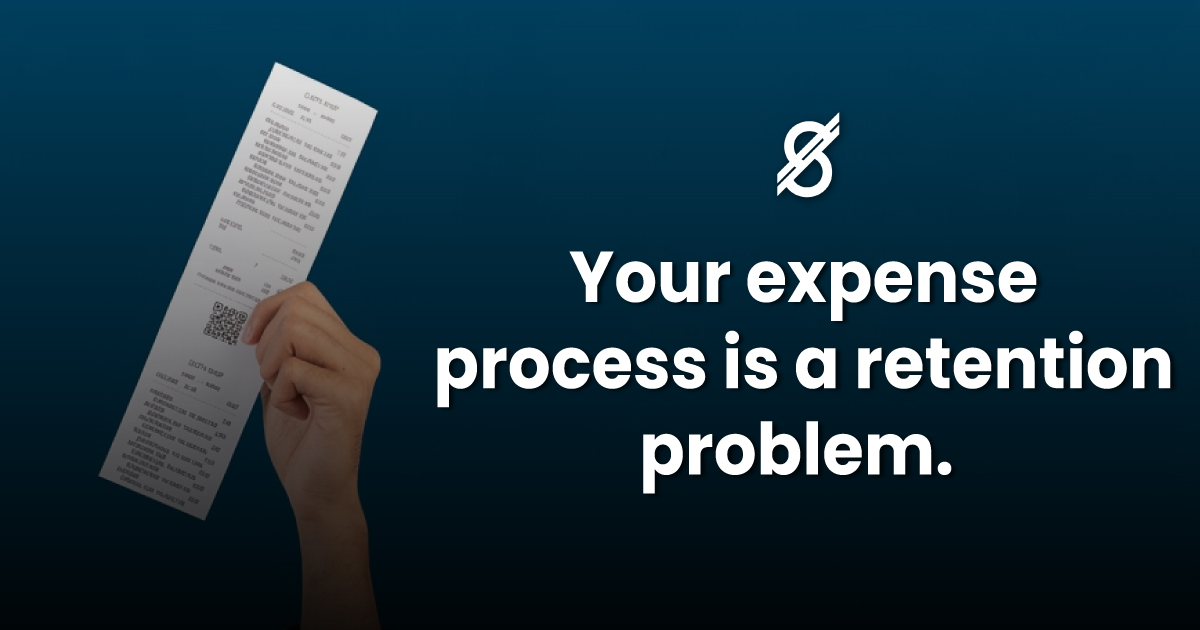
Your expense process is a retention problem.
"Expense reimbursements" sounds like a finance topic. It isn't. It's a culture topic, one that your top performers are silently benchmarking you on every time they reach into their own pocket for a business expense.
The moment your senior hire starts taking notes
Imagine a strong new hire, someone who's worked at well-run companies before. Two weeks in, they take a client to dinner. What happens next defines how they'll think about your organization for months.
The old expense process: step by step
-
Pay for the client dinner out of their own pocket
First friction point. It's their money until further notice
-
Take a photo of the receipt and send it over WhatsApp
No system, no paper trail, no accountability
-
Wait 3 – 4 weeks for reimbursement
They still haven't been paid back
-
Chase the finance team twice to follow up
Their time spent correcting your process
They won't complain. That's the part that should worry you most. They'll just quietly note that the company operates like it's 2008. And the next time a recruiter calls with something better, all that accumulated friction becomes the tipping point.
"Top performers notice these things. They've seen how well-run companies operate, and they benchmark you against that standard whether you like it or not."
What your process is actually signaling
Every step of a broken expense workflow sends a message. Your best employees are reading between the lines.
Slow reimbursements
Tells employees their time and cash flow don't matter to you
No team cards
Signals lack trust. You make them front costs before they've earned it
Manual approvals
Shows you haven't invested in your own operations. So, why should they invest in you?
The numbers that reframe the decision
Operations managers often balk at the cost of issuing corporate cards or investing in expense tooling. The comparison they should actually be making is this:
Cost of doing nothing:
50–75% of annual salary, the average cost of replacing a mid-level employee. Recruiting fees, onboarding time, and productivity lost during the transition gap.
Cost of fixing it
Near zero per employee, the cost of issuing a team card with a spending limit and automated receipt matching. It isn't even a close comparison.
Retention is an operational problem.
And it has an operational solution.
What businesses that get this right do differently
Issue dedicated team cards with per-person limits
Trust, with guardrails. Employees spend without friction; finance stays in control without micromanaging.
Automate receipt capture at the point of spend
Photograph, categorize, done. No WhatsApp chains. No chasing. The receipt is reconciled before the employee even gets back to their desk.
Deduct directly from the corporate budget in real time
Nobody waits weeks for a $50 reimbursement. It was never their money to begin with.
Give employees visibility into their own spending
When people can see their balances and limits, they self-manage. Less oversight is needed, not more.
The compounding effect on your team
When you remove expense friction, three things happen at once, and they reinforce each other.
Finance saves hours
No more chasing receipts, reconciling spreadsheets, or processing reimbursement runs
Employees feel respected
The signal is clear: this company trusts us and invests in how we work
Retention quietly improves
The day-to-day friction that makes good people leave simply disappears
The companies that treat operational excellence as a retention strategy are the ones keeping their best people. It's not a coincidence.
Give your team the process they deserve.
Team cards, automated receipts, real-time budgets, everything your finance team and your employees will thank you for.